
WHY STAINLESS STEEL
Stainless steel outdoor kitchens.
Every LUXPODIA pod is an outdoor stainless steel kitchen: frame, cabinetry and canopy built from genuine 304 stainless steel at our own factory, then finished for the way you live — brushed, colour-coated, wood-look or mirror-polished. This page explains why the material — and the grade — matters outdoors, and how our stainless steel outdoor kitchen units are put together.
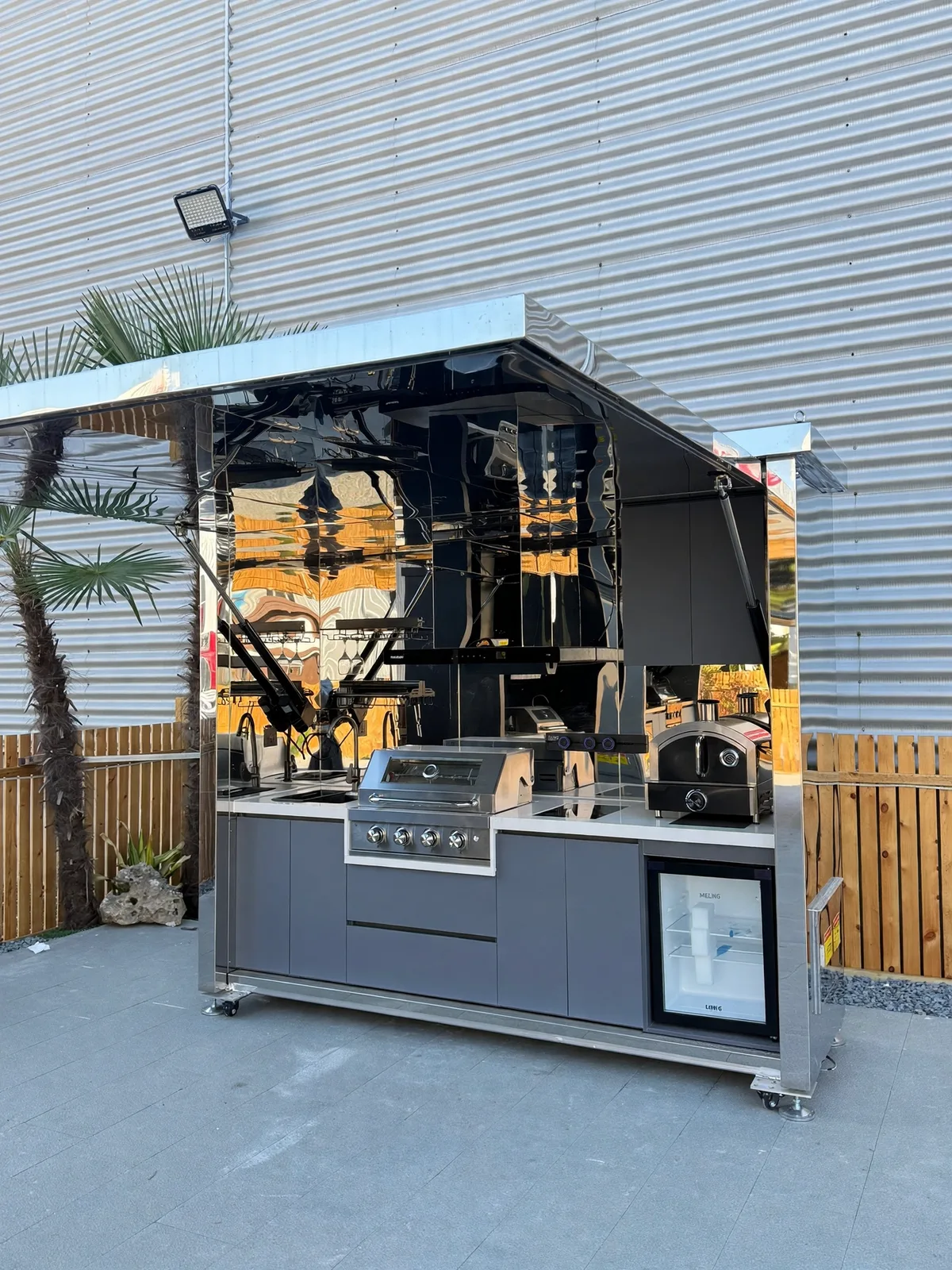
Mirror Edition ↗
Explore configuration
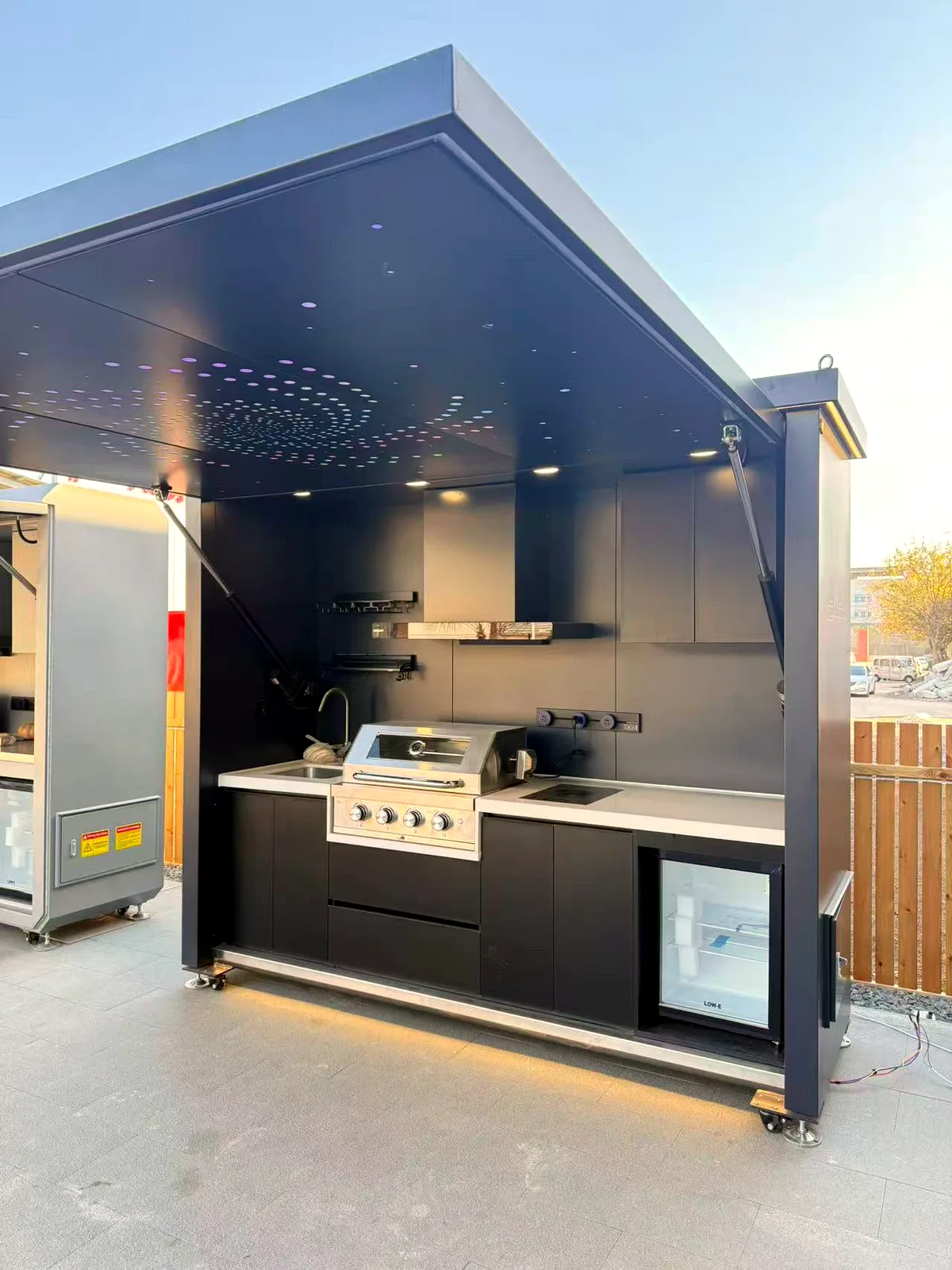
Obsidian ↗
Explore configuration
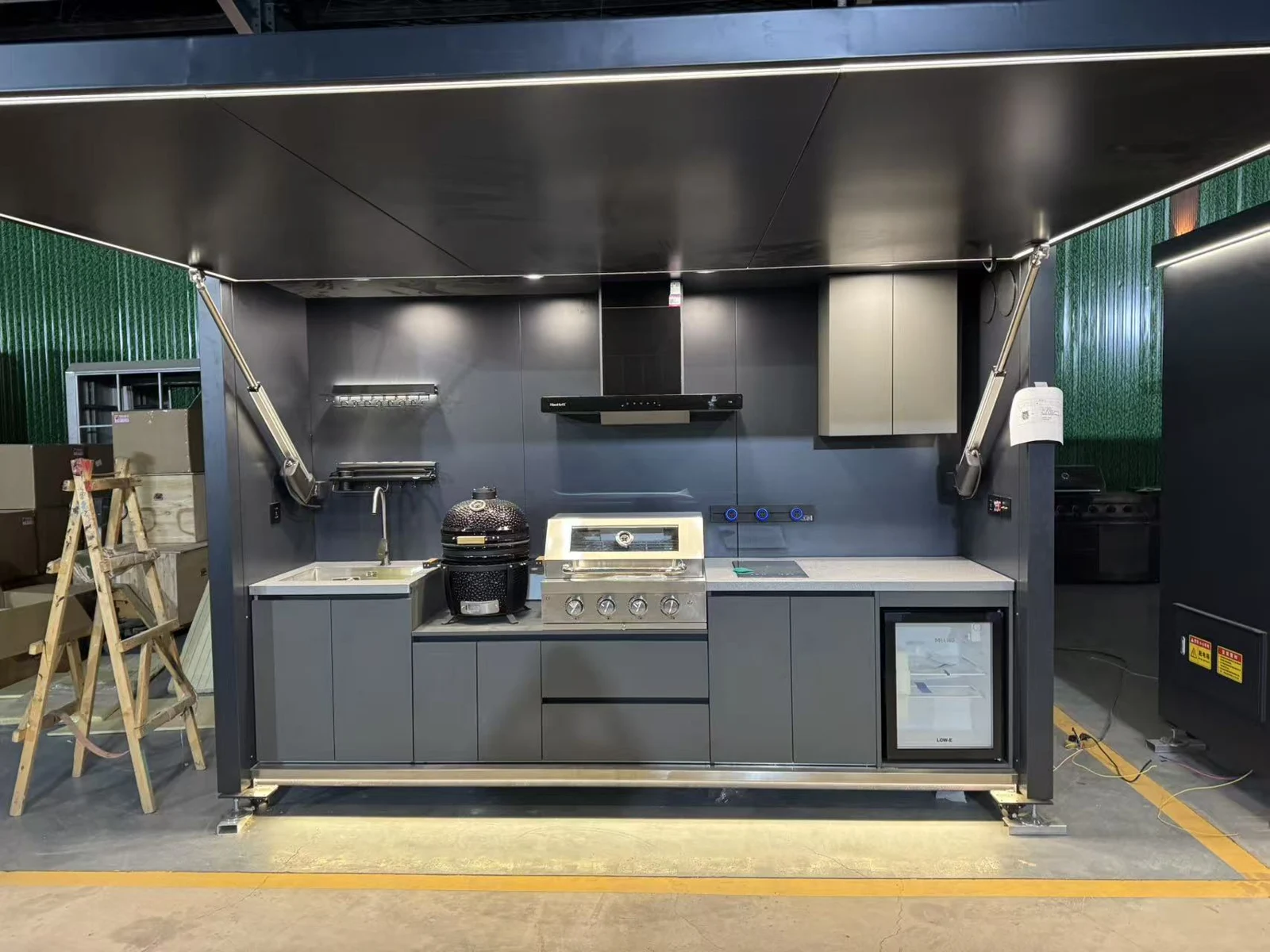
Chef Edition ↗
Explore configuration
Built for weather, not just for looks
An outdoor kitchen lives outside in every season: rain, sun, frost, salt air near the coast and chlorine near the pool. Timber swells and needs oiling, painted mild steel chips and then rusts at the chip, and masonry holds damp. Stainless steel is the material that professional kitchens have always used because it answers all of that at once — it resists corrosion, does not absorb moisture, grease or odours, and a surface that has been rained on in the morning can be wiped down and cooked on by lunch. That is why our pods are stainless steel construction from the frame outwards, not a steel skin over something weaker.
Genuine 304, and why the grade matters
Not everything sold as stainless steel deserves the name. We build every pod from genuine 304 stainless steel — the grade specified for outdoor structures and professional food environments because its corrosion resistance is real rather than cosmetic. Much of the low-cost "stainless" outdoor furniture that shows rust within a season is made from lower grades with a fraction of the protection, sold under the same two words and priced accordingly. With metal, you get what you pay for: the grade is the difference between a kitchen that wipes clean after five winters and one that stains after the first. We state our grade plainly, and it is confirmed in your order documents — ask any seller the same question before you compare prices.
Hygienic and easy to clean
Food preparation outdoors has the same hygiene stakes as indoors. Stainless steel worktops and cabinet fronts have no pores for spills to soak into, so a wash with warm water and mild detergent returns the surface to clean — one reason the same material lines commercial kitchens. For a family pod that means no lingering smell after a fish night; for a hotel or restaurant it means a station that can be cleaned down to a professional standard every day. Our commercial outdoor kitchen configurations are planned around exactly that daily routine.
One material, five finishes
Stainless steel does not have to look industrial. The Mirror Edition is polished to a reflective finish that picks up the garden around it. The Obsidian is coated in a dark architectural finish over the steel structure. The Copper Studio pairs copper tones with wood-look cabinet fronts, the Lumière uses a light finish with perimeter illumination, and the Chef Edition keeps the working, brushed character of a cook's kitchen. The material underneath is the same; the character is yours to choose, and every finish is confirmed in writing before production.
Stainless steel against the alternatives
Buyers usually weigh stainless steel against three familiar options. Masonry and stone builds look permanent, but they are constructed on site over weeks, hold damp through winter, and cannot move if the garden changes. Timber cabinetry is warm and traditional, yet outdoors it asks for regular oiling and sealing, and swells around sinks and dishwashers. Painted or powder-coated mild steel starts crisp, but one deep chip at a corner or hinge becomes the place corrosion starts. A stainless steel unit avoids the maintenance cycle of the first two and the weak point of the third, which is why it is the default material wherever outdoor kitchens are worked hard — restaurants, resorts and rental properties as much as family gardens.
What we confirm before your unit is built
The material itself is settled: genuine 304 stainless steel, stated in your order documents. What we confirm with you before production is everything around it — the finish for your setting, the care routine for your exposure, whether the unit will live inland or coastal, beside a pool or in a commercial setting — together with dimensions, equipment and utility requirements, all in writing, so the unit that arrives is the unit that was specified, with no substitutions made along the way.
How our stainless steel units are built
Each unit starts as sheet and profile at our Linyi factory: cutting, bending, welding, finishing, canopy assembly and equipment fitting happen under one roof, which is how we hold a complete pod to one standard of fit and finish. You can see the process on our manufacturing page, including the packing and loading videos. Every unit is built from genuine 304 stainless steel and the grade is stated in your order documents; tell us about coastal exposure or pool proximity when you enquire, and we will confirm the finish and the care routine for your conditions.
Good to know
Stainless steel kitchen questions, answered.
Why choose a stainless steel outdoor kitchen?+
We build from genuine 304 stainless steel, the material professional kitchens are built from: it resists weather, does not absorb moisture or odours, wipes clean after cooking and stands up to daily use. Built as a complete pod, the structure, cabinetry and canopy share one material standard, so the whole unit ages evenly outdoors.
Will a stainless steel outdoor kitchen rust?+
Our pods are built from genuine 304 stainless steel — the grade specified for outdoor and professional food use precisely because it resists rust properly — so with basic care, rust should not be an issue in normal outdoor service. The kitchens that give stainless steel a bad name are usually built from lower grades sold simply as “stainless”: they look identical on day one and very different after a wet season, which is what the lower price buys. Exposure still matters — coastal air and pool chemicals are harder on any metal — so rinse off salt spray, avoid leaving chlorine-based cleaners sitting on the surface, and close the canopy when the kitchen is idle.
How do I clean and maintain a stainless steel outdoor kitchen?+
Wash surfaces with warm water and a mild detergent, wipe with a soft cloth along the grain of the finish, and dry afterwards. Avoid leaving chlorine-based cleaners or steel wool on the surface, rinse off salt spray in coastal locations, and close the canopy when the kitchen is not in use. The full care notes for your configuration are confirmed with your order documents.
Is a stainless steel outdoor kitchen suitable for commercial use?+
Yes. The same hygiene and durability that suit a family garden suit restaurants, hotels and resorts, where the station is cleaned down daily and worked through a full service. Our custom page explains how we configure units for commercial duty, and multi-unit projects are produced to one confirmed master specification.
What finishes can a stainless steel outdoor kitchen have?+
The stainless steel structure can be finished brushed, coated in architectural colours, paired with wood-look cabinet fronts, or polished to the reflective finish of our Mirror Edition. Finishes are selected at the design stage and confirmed in writing before production.
Your project starts here
Make the outdoors
worth gathering in.
Tell us your market, configuration and quantity. We will help define your next kitchen pod.